
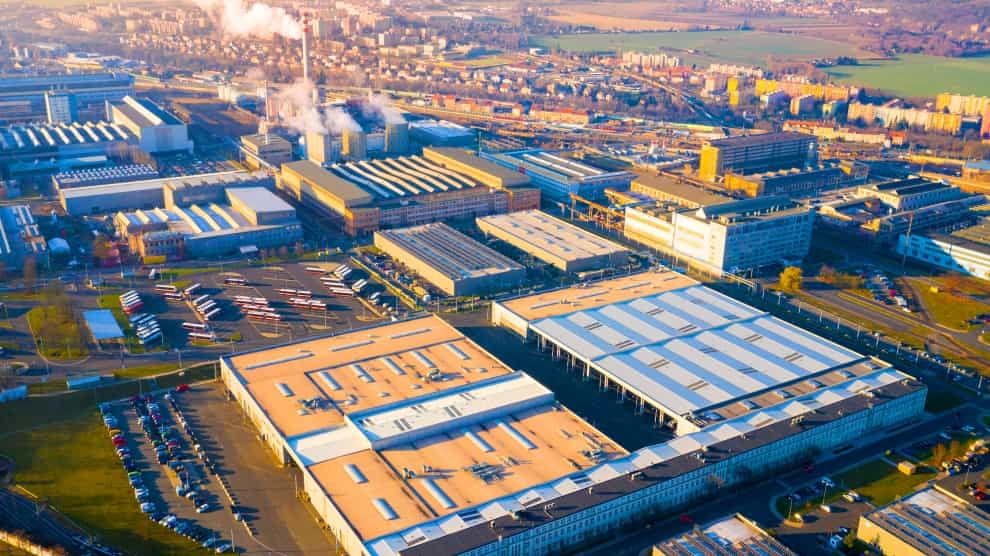
European manufacturing is at a crossroads. Facing relentless competitive pressure from lower-cost Asian producers, energy price volatility, demographic workforce shortages, and the most ambitious climate regulatory agenda in the world, the continent’s industrial base has no option but to reinvent itself — fundamentally and rapidly. The good news is that Europe possesses precisely the ingredients necessary for that reinvention: world-class engineering talent, deep capital markets, a coherent regulatory framework, and a tradition of industrial excellence that stretches back centuries. In 2026, automation and sustainability are not merely operational trends — they are the twin engines of Europe’s manufacturing renaissance.
The Pressure Points Forcing Transformation
To understand where European manufacturing is going, you must first understand the forces making the status quo untenable.
Labor costs and demographic decline are perhaps the most structurally significant pressures. Germany, Italy, France, and most Western European nations are aging societies with shrinking working-age populations. Labor shortages in skilled manufacturing roles — CNC operators, welders, industrial engineers, robotics technicians — have become chronic across the continent. Wages are rising faster than productivity in many sub-sectors, while the pipeline of young workers entering traditional manufacturing trades is insufficient to replace retiring generations.
Energy costs, as explored extensively in the post-2022 European energy crisis, remain structurally elevated compared to global competitors. US industrial electricity prices, subsidized in part by the Inflation Reduction Act, are significantly below European benchmarks. Gulf-region manufacturers benefit from near-zero energy input costs. Chinese producers, despite rising domestic wages, still command cost advantages in multiple industrial categories. For European factories to remain competitive, they must either reduce energy consumption dramatically or generate their own clean energy — both imperatives pointing directly toward automation and sustainability investment.
Regulatory pressure is simultaneously a burden and a stimulus. The EU’s Corporate Sustainability Reporting Directive (CSRD), the Carbon Border Adjustment Mechanism (CBAM), and the EU’s industrial decarbonization roadmap create compliance costs for manufacturers — but also create powerful incentives to invest in cleaner, more efficient production technologies ahead of competitors in less regulated markets. European manufacturers who achieve early compliance are building strategic moats against future regulatory tightening globally.
The Automation Revolution: Industry 4.0 Becomes Industry 5.0
European manufacturing’s response to labor shortages, cost pressures, and quality demands has been the aggressive adoption of automation — and in 2026, this automation wave is entering its most transformative phase yet.
The concept of Industry 4.0 — the integration of digital technologies, IoT sensors, data analytics, and robotics into manufacturing processes — has been the organizing framework for industrial modernization over the past decade. Europe has been a global leader in this transition, with Germany’s mechanical engineering sector and its globally dominant companies like Siemens, Bosch, Kuka, and SAP providing both the machinery and the software platforms that define the global standard for smart manufacturing.
In 2026, the frontier is Industry 5.0 — a paradigm that goes beyond the pure efficiency optimization of Industry 4.0 to emphasize human-robot collaboration, resilience, and sustainability as co-equal design objectives alongside productivity. The European Commission has formally adopted Industry 5.0 as its policy framework, signaling that European manufacturers are not merely competing on automation scale but on the quality, adaptability, and social responsibility of their production systems.
Collaborative Robotics (Cobots)
The defining technology of Europe’s automation transformation is the collaborative robot — a new generation of industrial robots designed to work alongside human operators rather than replacing them entirely. Unlike traditional industrial robots that operate in fenced-off safety zones, cobots can sense human presence and adjust their behavior in real time, enabling a fluid division of labor where humans handle judgment-intensive, dexterous tasks while robots manage repetitive, heavy, or precision-demanding operations.
Cobot adoption is accelerating across European manufacturing SMEs — historically the most resistant to automation due to capital constraints and flexible production requirements. New cobot models from companies like Universal Robots, Fanuc, and ABB are now cost-recoverable within 12–18 months for many applications, making automation economically accessible to businesses that previously could not justify the investment. Central European manufacturers in Poland, Czech Republic, and Hungary are among the fastest adopters, as rising labor costs in these previously low-cost nearshoring destinations make automation investments increasingly attractive.
Artificial Intelligence and Digital Twins
Artificial intelligence is transforming manufacturing not just at the level of robotic motion control, but at every layer of the production system. AI-powered predictive maintenance platforms analyze sensor data from industrial machinery to predict failures before they occur — reducing unplanned downtime, extending equipment life, and dramatically cutting maintenance costs. European industrial conglomerates like Siemens and Schneider Electric are embedding AI maintenance intelligence directly into their automation platforms, creating comprehensive digital operating systems for manufacturing facilities.
Digital twins — precise virtual replicas of physical manufacturing systems — are becoming standard tools for production planning, process optimization, and new product introduction. By simulating changes in a virtual environment before implementing them physically, manufacturers can eliminate costly trial-and-error iterations, reduce material waste, and accelerate time-to-market for new products. The Airbus factory of the future, BMW’s Neue Klasse production system, and Siemens’ own manufacturing facilities are all built on digital twin architectures that would have been science fiction a decade ago.
Additive Manufacturing and Mass Customization
3D printing and additive manufacturing are breaking down one of manufacturing’s oldest constraints — the inverse relationship between product customization and production efficiency. Traditional manufacturing economics favor standardization: the more identical units you produce, the lower the per-unit cost. Additive manufacturing inverts this logic, enabling highly customized components to be produced at costs approaching those of mass production.
For European manufacturers targeting premium market segments — aerospace components, medical devices, luxury goods, high-performance automotive parts — additive manufacturing enables a differentiation strategy that low-cost Asian competitors cannot easily replicate. Germany and the Netherlands are global leaders in industrial additive manufacturing, with companies like EOS, Trumpf, and Materialise defining the frontier of the technology’s industrial application.
Sustainability: From Compliance Requirement to Competitive Advantage
The sustainability transformation of European manufacturing is simultaneously the most challenging and the most strategically significant shift underway. Driven by the EU’s Green Deal, the CSRD, CBAM, and consumer demand for traceable, low-carbon products, manufacturers across the continent are redesigning their products, processes, and supply chains from the ground up.
Circular Economy and Industrial Symbiosis
The linear “take-make-dispose” industrial model is being systematically replaced by circular economy principles that design waste out of production systems. This means engineering products for disassembly and reuse, capturing and reprocessing industrial waste streams as inputs for other processes, and building closed-loop material flows that dramatically reduce both input costs and environmental impact.
Industrial symbiosis — where the waste outputs of one facility become the raw material inputs of another — is gaining traction across European industrial parks. In Rotterdam, Antwerp, and Ludwigshafen, chemical and petrochemical manufacturers are building integrated industrial ecosystems where heat, gases, and chemical byproducts are exchanged systematically, reducing total energy consumption and waste generation across the cluster.
For investors, the circular economy creates new asset classes — waste-to-resource platforms, industrial recycling infrastructure, remanufacturing operations, and product-as-a-service business models — that combine strong financial returns with measurable environmental impact.
Green Steel and Industrial Decarbonization
The decarbonization of heavy industry — steel, cement, aluminum, chemicals — represents the hardest and most capital-intensive dimension of European manufacturing’s sustainability transformation. These sectors are responsible for a disproportionate share of industrial carbon emissions and cannot be decarbonized through electrification alone.
Green steel — produced using hydrogen-based direct reduction of iron ore rather than coal-fired blast furnaces — is transitioning from pilot scale to commercial deployment. Sweden’s SSAB, Germany’s thyssenkrupp, and Sweden’s H2 Green Steel are all constructing or commissioning large-scale green steel facilities backed by EU innovation funding and long-term offtake agreements from automotive manufacturers committed to decarbonizing their supply chains. The premium pricing that green steel commands today will converge toward parity with conventional steel as hydrogen production costs decline — establishing a competitive foundation for European steel that coal-based producers elsewhere cannot match.
Sustainable Supply Chain Mapping
The CSRD and the Corporate Sustainability Due Diligence Directive (CSDDD) are forcing European manufacturers to map and document the environmental and social performance of their entire supply chains — not just their own operations. This regulatory requirement is driving profound changes in how manufacturers select and manage suppliers, with sustainability performance becoming a core vendor qualification criterion alongside price, quality, and delivery performance.
Companies that invest early in supply chain transparency platforms — tools that collect, verify, and report on supplier-level emissions, labor standards, and material provenance — are building data assets that will be required for regulatory compliance, green financing access, and premium market positioning. The EU’s Digital Product Passport initiative, which will eventually require detailed lifecycle environmental data for a wide range of manufactured goods, is accelerating this transition.
The Regional Manufacturing Map: Where the Future Is Being Built
Europe’s manufacturing transformation is not evenly distributed — it is concentrated in specific regions and countries that are making strategic investments to define the next generation of industrial capability.
Germany remains the continent’s most important manufacturing economy, now undergoing its most significant structural transformation since reunification. The combination of a reformed debt brake enabling infrastructure investment, €100 billion in planned defense manufacturing expansion, and a world-class automation technology ecosystem positions Germany to recapture industrial competitiveness — provided it can execute the transition quickly enough to prevent further deindustrialization in the interim.
Central and Eastern Europe is emerging as the continent’s most dynamic manufacturing growth region. Poland, Czech Republic, Hungary, Romania, and Slovakia are attracting investment in automotive supply chains, battery manufacturing, electronics assembly, and precision engineering — benefiting from EU membership, improving infrastructure, competitive labor costs, and geographic proximity to Western European end markets. Hungary’s BYD electric vehicle plant and Poland’s expanding semiconductor and defense manufacturing base are emblematic of this transformation.
The Nordic countries — particularly Sweden, Finland, and Denmark — are pioneering the most advanced integration of automation and sustainability in manufacturing globally. Swedish firms like Volvo, SKF, and Sandvik are demonstrating that high-wage, heavily automated manufacturing can be both globally competitive and deeply sustainable — a model that other European manufacturers are actively studying and attempting to replicate.
Investment Themes and Strategic Implications
For investors and business leaders, Europe’s manufacturing transformation generates several powerful and durable investment themes:
- Industrial automation platforms: Software and hardware companies enabling smart factory adoption at scale across European SMEs
- Green energy for industry: Power purchase agreements, on-site renewable generation, and green hydrogen supply infrastructure for industrial offtakers
- Circular economy infrastructure: Industrial recycling, remanufacturing, and waste-to-resource platforms serving EU regulatory mandates
- Supply chain transparency technology: Digital platforms enabling CSRD and CSDDD compliance reporting across complex global supply chains
- Advanced materials: Next-generation composites, bio-based materials, and recycled-content materials enabling sustainable product design
- Workforce reskilling services: Training platforms, simulation tools, and human-robot collaboration training programs addressing the skills gap in modernizing factories
The Defining Decade
The next ten years will determine whether European manufacturing emerges as the world’s most sophisticated, sustainable, and resilient industrial ecosystem — or gradually cedes ground to competitors who move faster on cost, automation, or energy access. The foundations for success are undeniably present: the engineering talent, the innovation ecosystem, the regulatory clarity, and the capital markets to finance transformation at scale.
What is required now is execution — the unglamorous, determined, day-by-day work of replacing legacy machinery with automated systems, redesigning products for circularity, reskilling workforces for new roles, and building the supply chain transparency that regulators and customers increasingly demand. The European manufacturers who treat automation and sustainability as integrated strategic imperatives — not competing budget priorities — will define the future of global industry. Those who treat them as separate compliance exercises will find themselves outcompeted by those who understood that in the 21st century, the greenest factory is also the most efficient, the most resilient, and ultimately the most profitable.