
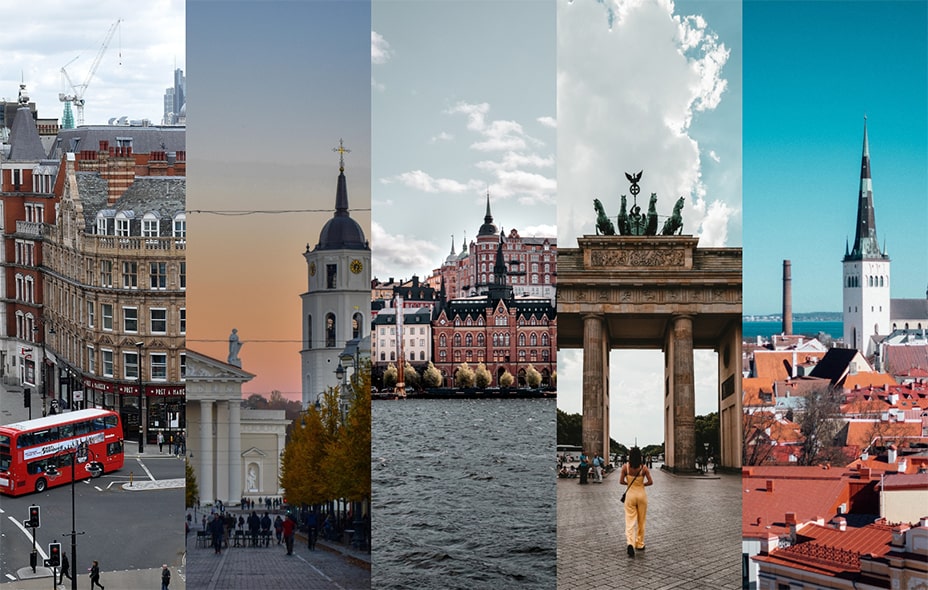
Europe is home to some of the most dynamic fintech ecosystems in the world, with capital‑rich hubs, strong tech talent, and increasingly fintech‑friendly regulation. In 2026, a handful of cities dominate where new fintechs choose to launch, scale, and raise capital. London, Amsterdam, Berlin, Paris, Stockholm, and Barcelona stand out as the leading European fintech hubs, while smaller centers such as Zurich, Dublin, Lisbon, and Vienna are also emerging fast. This article explores the top European cities for fintech companies right now, looking at funding, talent, regulation, and sector strengths.
Why City Choice Matters for Fintechs
For a fintech startup, the choice of city is not just about lifestyle or cost of living. It shapes access to:
- Capital: Proximity to VCs, family offices, and corporate‑VC programs that specialize in payments, banking‑tech, insurance‑tech, and crypto‑adjacent infrastructure.
- Talent: Availability of engineers, data scientists, compliance specialists, and product‑focused PMs who understand PSD2, open banking, anti‑money‑laundering (AML), and cloud‑native stacks.
- Regulatory environment: How easy it is to obtain payment institution (PI), e‑money, or crypto‑asset licenses and how supportive local regulators are of sandbox‑style experimentation.
- Cross‑border reach: Whether the city acts as a gateway to the EU single market, the UK, or global markets.
Europe’s fragmentation means that picking the right city can be the difference between smooth scaling across borders and getting bogged down in local‑only bottlenecks. Below are the cities that currently offer the best balance of these factors for fintech founders.
1. London – The Capital of European Fintech
London remains the undisputed center of European fintech, both in terms of capital and company density. A 2025–2026 analysis of tech funding shows that London alone captures the majority of UK tech investment, with fintechs such as Checkout.com, Revolut, and Tide among its highest‑value startups.
Why it works for fintechs:
- Deep capital pools: London attracts global VCs and is home to numerous fintech‑specific funds, accelerators, and bank‑backed innovation programs.
- Regulatory maturity: The UK’s Financial Conduct Authority (FCA) has long‑standing fintech‑friendly frameworks, including its regulatory sandbox and clear rules for e‑money and payment institutions.
- Global talent: With tens of thousands of developers and a dense fintech community, London is ideal for payments, digital banking, regtech, and crypto‑infrastructure.
Trade‑offs:
- High costs (salaries and office rents).
- Brexit‑related complexity when targeting the EU, which has pushed some fintechs to dual‑base themselves in Amsterdam or Dublin.
2. Amsterdam – The Green Finance and Payments Hub
Amsterdam has emerged as one of Europe’s most attractive fintech locations, especially for payments, embedded finance, and green‑aligned financial services. The city ranks very high in the Global Green Finance Index and is a major hub for companies building sustainable‑finance and climate‑risk products.
Why it works for fintechs:
- Strong payment ecosystem: Dutch fintechs such as Mollie and major card‑network and banking partners have helped Amsterdam become a go‑to place for merchant‑payments and cross‑border transaction‑tech.
- Fintech‑friendly regulation: The Netherlands’ regulator (DNB) and the Dutch Central Bank support innovation while maintaining strict compliance standards, making Amsterdam a safe base for EU‑facing fintechs.
- Gateway to EU single market: Dutch‑domiciled fintechs can often passport services across the EU under PSD2‑aligned licenses.
Trade‑offs:
- Rising housing and office costs.
- Smaller local talent pool compared with London, so firms often mix local hires with remote‑first teams.
3. Berlin – Startup Factory with Fintech Muscle
Berlin is best known as a broader tech‑startup hub, but its fintech sector has grown rapidly. The city has seen a doubling share of European fintech investment in recent years, with Berlin‑based companies capturing a growing slice of total capital raised across the continent.
Why it works for fintechs:
- Vibrant startup culture: Berlin’s low cost of living (relative to London or Paris) and high density of engineers, designers, and product managers make it attractive for early‑stage fintechs.
- Strong fintech “founder factories”: Berlin ranks among the top European cities for producing fintech founder alumni and spinouts, thanks to successful exits and repeat entrepreneurs.
- Open‑banking and embedded‑finance focus: Many Berlin‑based startups work on banking‑as‑a‑service (BaaS), neobanking, and SME‑focused lending platforms.
Trade‑offs:
- German regulation (BaFin) can be slower and more conservative than regulators in more agile fintech‑centric jurisdictions.
- Fintech salaries are lower than in London or Zurich, which can make it harder to retain top talent long‑term.
4. Paris – Institutional Fintech and Scale‑Ups
Paris has become a late‑stage fintech powerhouse, with many French fintechs successfully scaling from Series B onward. The city is home to multiple “unicorn founder factories” that repeatedly produce fintech founders and spin‑out teams.
Why it works for fintechs:
- Strong institutional support: French banks, insurers, and large corporates actively partner with fintechs through open‑banking pilots, API‑based collaborations, and innovation labs.
- Government‑backed innovation programs: France’s “Paris‑la‑Défense” and “La Station F”‑style ecosystems provide subsidized office space, grants, and connections to regulators.
- Focus on regulated finance: Paris thrives in wealthtech, insurance‑tech, and regtech, where close engagement with regulators and incumbents is an advantage.
Trade‑offs:
- French labor law and bureaucracy can slow down hiring and workplace changes.
- The ecosystem is still more institution‑oriented than lean‑startup‑oriented, which can be a mismatch for very early‑stage founders.
5. Stockholm – The Nordic Payments Powerhouse
Stockholm is one of the most productive fintech hubs per capita in Europe. The city has generated multiple high‑impact fintech founders and spinouts, with Klarna being the most famous example.
Why it works for fintechs:
- Payments and BNPL leadership: Stockholm is the epicenter of buy‑now‑pay‑later and e‑commerce payments, with a strong network of developers, data‑science talent, and product‑led founders.
- High‑quality tech talent: Sweden’s universities and strong engineering culture produce a steady stream of scala‑, python‑, and cloud‑native engineers who can build low‑latency transaction systems.
- Fintech‑friendly regulatory sandbox: Swedish regulators support innovation while maintaining high standards on AML and consumer protection, making Stockholm a solid base for EU‑wide fintechs.
Trade‑offs:
- Relatively small domestic market, so companies must plan for cross‑border expansion from day one.
- Higher salaries and social‑security costs compared with Eastern Europe or Southern Europe.
6. Barcelona – Southern Europe’s Emerging Fintech Center
Barcelona is one of the fastest‑growing fintech cities in Europe, combining Mediterranean lifestyle with a growing tech ecosystem. Already, around 70% of European fintech investment flows to companies based in cities such as London, Berlin, Stockholm, Paris, Barcelona, and Amsterdam.
Why it works for fintechs:
- Rising startup density: Barcelona has seen a surge in AI‑driven fintech, payments, and financial‑data analytics firms, often with a strong Iberian‑Latin American focus.
- Quality of life and cost: Barcelona offers a high quality of life at lower costs than London, Zurich, or even Amsterdam, making it attractive for remote‑first or hybrid fintech teams.
- Access to regional markets: Barcelona is an ideal launchpad for Spain, Portugal, and parts of Latin America, where many fintechs are targeting underserved SMEs and consumers.
Trade‑offs:
- Regulatory and banking‑infrastructure maturity is still behind London or Amsterdam, so fintechs may need local partners or dual‑licensing.
- The talent pool is smaller than in Northern European hubs, so hiring often requires cross‑border recruitment.
Honorable Mentions: Zurich, Dublin, Lisbon, Vienna
Beyond the top six, several other European cities are building strong fintech identities:
- Zurich: A global private‑banking and wealth‑tech hub, with strong demand for crypto‑assets, institutional fintech, and regtech solutions. Swiss salaries are among the highest in Europe, but the city offers deep institutional capital and regulatory stability.
- Dublin: Irish‑domiciled fintechs benefit from English‑language infrastructure, EU‑passporting rights, and a 12.5% corporate‑tax regime, making Dublin popular for SaaS‑fintech, banking‑tech, and insurtech firms targeting the EU and U.S..
- Lisbon: Portugal’s fintech scene is growing fast, with multiple startup accelerators, incubators, and a growing payments ecosystem. Lisbon attracts fintechs looking for lower costs, strong English‑speaking talent, and remote‑first cultures.
- Vienna: Austria’s capital is emerging as a central‑European fintech node, with strengths in payments, compliance‑tech, and insurtech and good rail and air links to other EU hubs.
These cities are increasingly attractive for specialized fintechs—such as crypto‑infrastructure, compliance‑tech, or regional‑payments platforms—that want lower costs or strategic positioning without sacrificing access to EU markets.
What City Should Your Fintech Choose?
Deciding where to base a fintech in Europe depends on stage, regulatory needs, target market, and cost structure:
- Pre‑seed and seed‑stage:
- Stockholm, Berlin, or Amsterdam for strong talent, accelerators, and early‑stage capital.
- Series A–B, scaling across Europe:
- London, Amsterdam, or Dublin for regulatory depth, EU‑passporting, and access to global investors.
- Payments and BNPL:
- Stockholm, London, or Amsterdam for built‑in networks and open‑banking maturity.
- Green‑finance and ESG:
- Amsterdam and Stockholm for alignment with green‑finance initiatives.
- Cross‑border Latin‑aligned:
- Barcelona or Lisbon for regional gateway and lifestyle advantages.
Regardless of location, any fintech operating in Europe must closely follow PSD2, GDPR, MiCA (crypto‑assets), and local AML rules, which heavily influence where licenses are obtained and where headquarters are placed.
Right now, London, Amsterdam, Berlin, Paris, Stockholm, and Barcelona are the top European cities for fintech companies, each offering a distinct mix of capital, talent, and regulatory sophistication. Smaller hubs like Zurich, Dublin, Lisbon, and Vienna are also gaining traction, especially for niche fintech sub‑sectors. For founders building payments, banking‑tech, insurtech, or crypto‑adjacent infrastructure, choosing the right city is a strategic decision that can shape how quickly they scale, how much they pay for talent, and how smoothly they navigate European regulation. In 2026 and beyond, Europe’s fintech map will likely remain multi‑hub, but those who position themselves in the leading cities will have the best shot at becoming the next Adyen, Klarna, or Revolut‑style success.