
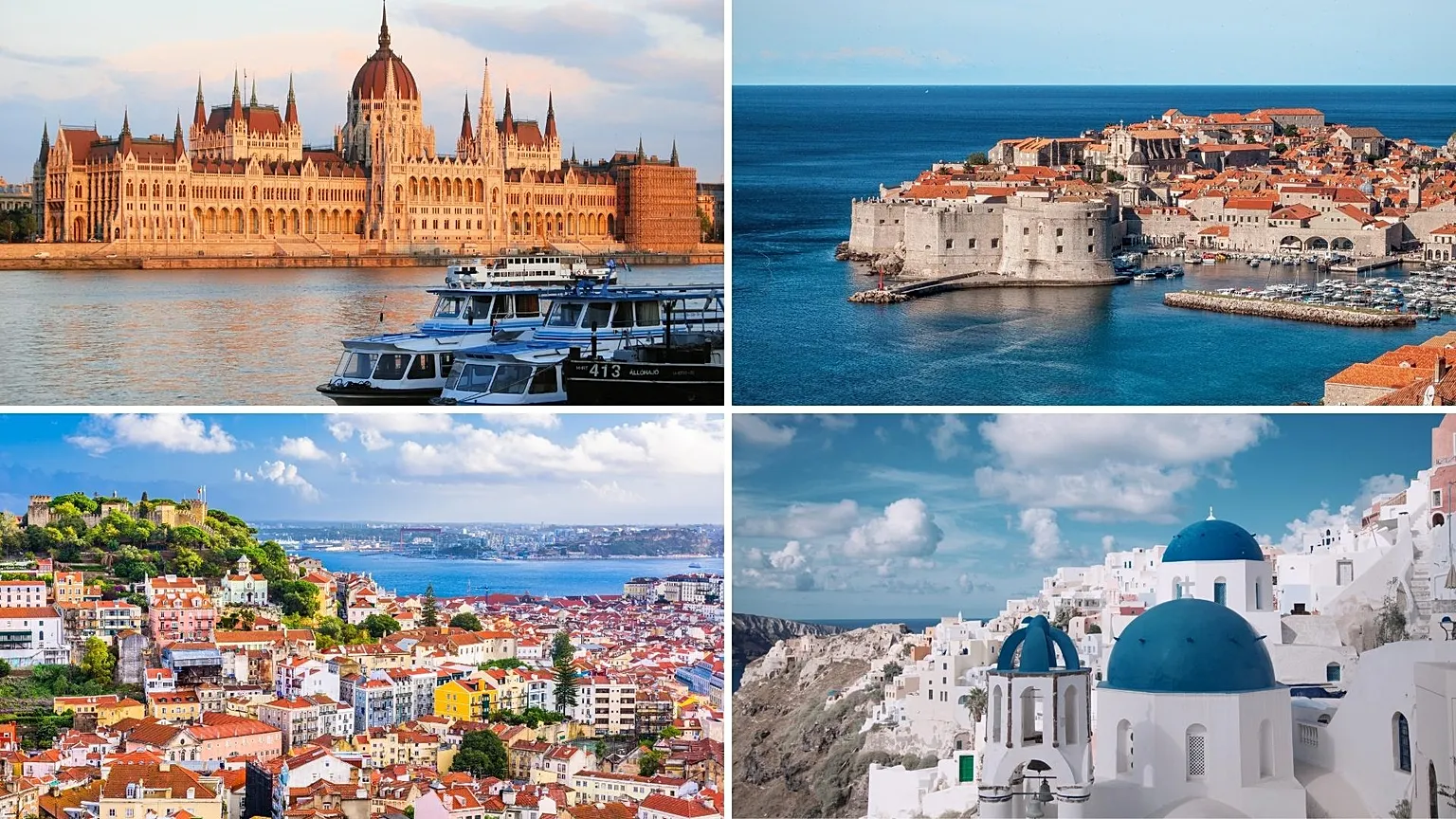
Europe has become one of the world’s most attractive regions for digital nomads, thanks to a growing number of dedicated digital nomad visas (DNVs) and long‑stay remote‑work programs. Many European countries now offer clear pathways for remote employees, freelancers, and self‑employed professionals to live and work legally while serving foreign‑based clients or companies. These visas typically require proof of stable income, health insurance, clean criminal‑record checks, and a local address, but they open the door to the Schengen Area, EU‑level tax structures, and high‑quality infrastructure.
This article explores the best countries in Europe for digital nomad visas right now, focusing on income requirements, tax rules, visa length, cost of living, and lifestyle so that remote workers can choose the right European base in 2026.
What Makes a Country “Best” for Digital Nomad Visas?
Before diving into individual countries, it helps to know what criteria matter most for digital nomads:
- Income threshold: The minimum monthly income set by the country (often 2–4× the local minimum wage).
- Tax treatment: Whether the country taxes only foreign‑sourced income, offers flat rates, or gives partial tax breaks.
- Visa duration and renewal: How long you can stay initially and how many times you can renew before needing permanent residency.
- Path to residency or citizenship: Whether the country offers a clear route to permanent residency or EU citizenship after several years.
- Cost of living and quality of life: Affordable housing, reliable internet, transport links, and a strong expat or remote‑worker community.
Using these criteria, six European countries consistently stand out: Portugal, Spain, Greece, Estonia, Croatia, and Bulgaria, with others such as Germany, Italy, Romania, and Cyprus also worth considering for specific niches.
1. Portugal – The Remote‑Work Pioneer
Portugal was one of the first European countries to introduce a digital‑nomad‑friendly route via its D8 visa (“temporary residence for remote workers”), which has become a benchmark for other EU states.
Key features (2026 snapshot):
- Minimum income: Around €3,480 per month (roughly 4× the Portuguese minimum wage).
- Duration: Initial residence permit for one year, renewable for up to five years toward permanent residency.
- Tax: Flat 15% special tax rate for qualifying non‑habitual residents (NHR) on certain types of remote‑earned income, though rules are under review and may tighten modestly by 2026.
- Life and logistics: Strong nomad communities in Lisbon, Porto, and the Algarve, relatively low cost of living compared with Western Europe, and excellent internet and café culture.
Portugal is especially attractive if you want a long‑term EU base with renewal‑friendly rules and a warm, Mediterranean lifestyle. The main downside is increasingly competitive housing markets in Lisbon and Porto, which push prices up in central areas.
2. Spain – Large Market, Flexible Long‑Stay Visa
Spain’s “International Remote Work Visa” (Visado de Teletrabajo Internacional) positions Spain as one of the most powerful options for digital nomads who want to live in a large, culturally rich EU country.
Key features:
- Minimum income: Around €2,850 per month (about 200% of Spain’s minimum interprofessional wage).
- Duration: Initial one‑year visa if applied from abroad; those who apply inside Spain can get up to three years at once, with renewals leading to permanent residency after five years.
- Tax: Remote workers supplying services from Spain to foreign employers are taxed under Spanish rules, with effective rates that can be around 24% depending on circumstances and deductions.
- Lifestyle: Spain offers a wide range of environments—Barcelona, Madrid, Valencia, Malaga, the Canary Islands—each with strong Wi‑Fi, coworking spaces, and bustling expat communities.
Spain is ideal if you want a big‑country feel with diverse climates and cities, and you’re comfortable with moderate tax rates and tight but clear renewal rules. Its size also makes it easy to switch regions without leaving the country.
3. Greece – Tax Incentive and Lifestyle Combo
Greece’s digital‑nomad visa, created under Law 4825/2021, combines relatively high income thresholds with a unique 50% reduction in income tax for qualifying remote workers who commit to a multi‑year stay.
Key features:
- Minimum income: €3,500 net per month (with +20% for a spouse and +15% per child).
- Duration: Initial 12‑month stay, then conversion to a two‑year renewable residence permit.
- Tax: After becoming a Greek tax resident, digital nomads can enjoy 50% of the standard income tax rate if they keep their foreign income for at least two years.
- Lifestyle: Greece excels in cost‑effective coastal living, with cities like Athens and islands such as Crete, Rhodes, or Paros offering strong internet and growing nomad communities.
For remote workers who prioritize sun, sea, and strong tax optimization, Greece is arguably Europe’s best deal, especially if you plan to stay more than two years. The main trade‑off is that public services and bureaucracy can be slower than in Northern Europe.
4. Estonia – The 100% Digital‑First Nation
Estonia holds the title of first country in the world to launch a true digital nomad visa, and its 2026 program remains one of the most streamlined and tech‑friendly.
Key features:
- Minimum income: Around €3,500 per month from remote work or self‑employment for a company outside Estonia.
- Duration: Visa valid for up to one year, with the possibility of renewal and a clear path to entrepreneur or residence permits.
- Application: Almost entirely online, leveraging Estonia’s renowned e‑Residency and digital‑government infrastructure.
- Tax: If you spend more than 183 days in Estonia, you become a tax resident but benefit from extensive double‑taxation agreements and a highly digitalized tax system.
Estonia is ideal for tech‑savvy nomads, founders, and IT professionals who want to live in a country that feels like a “digital‑first” jurisdiction. Winters are cold, but the startup ecosystem, coworking spaces, and administrative simplicity compensate for the climate.
5. Croatia – Adriatic Lifestyle and Fast Citizenship Path
Croatia has become one of the most tantalizing options for digital nomads who want EU‑area access, beautiful coastlines, and an unusually fast route to EU citizenship.
Key features:
- Minimum income: Around €3,295 per month (foreign‑sourced remote income).
- Duration: Initial 18‑month visa, renewable for additional periods.
- Tax: Croatia does not tax foreign‑sourced income of non‑resident‑equivalent digital‑nomad visa holders, making it attractive for tax‑efficient planning.
- Citizenship path: It is possible to reach EU citizenship eligibility in about eight years from the start of the digital‑nomad visa, which is among the fastest in the EU.
- Lifestyle: From Split and Dubrovnik along the Adriatic coast to Zagreb and inland cities, Croatia mixes strong internet, UNESCO‑listed heritage, and relatively low living costs.
Croatia is best for nomads who want summer‑oriented living, EU benefits, and a clear long‑term plan—especially if you’re willing to make a multi‑year commitment and navigate slightly slower public‑sector processes.
6. Bulgaria – Low‑Cost, Low‑Tax EU Option
Bulgaria is emerging as a “value‑first” EU digital‑nomad destination, with one of the lowest cost‑of‑living profiles and a flat 10% tax rate on both personal and corporate income.
Key features:
- Minimum income: Around €2,583 per month (set at a relatively low level by EU standards).
- Duration: Typically one‑year digital nomad‑style residence, renewable.
- Tax: Flat 10% personal and corporate tax, which is among the lowest in the EU, making it attractive for freelancers and solopreneurs running EU entities.
- Cost of living: Monthly expenses in cities like Sofia or Plovdiv can stay roughly €1,000–€1,500 for a single person, depending on lifestyle.
Bulgaria is ideal if you want EU access on a budget, with strong internet and a growing remote‑worker scene. Downsides include a smaller expat community and less‑developed support infrastructure than in Western Europe.
Other Strong European Nomad Options
Beyond these six, a cluster of other EU countries offer interesting digital‑nomad‑style visas:
- Germany: Digital nomad‑style freelancer or self‑employed residence permits with high income thresholds and strong healthcare but higher costs and stiffer bureaucracy. Germany suits high‑earning tech professionals and consultants who want deep‑EU integration.
- Italy: Newer remote‑work and digital nomad‑type permits are appearing in Italy, often linked to self‑employment or freelance work, with regional variations in interpretation.
- Romania: Offers a one‑year digital nomad residence permit (renewable) with low costs, very fast internet, and a growing nomad community in Bucharest and Cluj‑Napoca.
- Latvia and Cyprus: Latvia’s long‑stay remote‑work visa and Cyprus’s low‑tax, English‑speaking environment attract nomads who want relaxed regulations and favorable tax profiles.
These countries are especially useful if you want niche tax advantages, cooler climates, or proximity to specific markets without fully committing to Portugal‑ or Spain‑style ecosystems.
How to Choose Your Best European Digital Nomad Base
When deciding among the best European countries for digital nomad visas in 2026, ask yourself:
- Are you okay with higher costs for maximum convenience and community? → Look at Portugal, Spain, or Estonia.
- Do you prioritize sun, sea, and tax incentives? → Greece or Croatia will feel more aligned.
- Are you budget‑conscious and tax‑focused? → Bulgaria or Romania may be your best fit.
- Do you want a fast‑track EU‑citizenship option? → Croatia stands out.
Most serious digital nomads also consider a “hub” strategy: picking one EU base (e.g., Portugal, Spain, or Greece) for the main visa, then using Schengen‑wide travel to spend time in other countries such as Italy, France, or the Netherlands without changing residency.
In 2026, Europe offers some of the world’s most structured and attractive digital nomad‑visa regimes. Portugal, Spain, Greece, Estonia, Croatia, and Bulgaria represent the current “best of the best” in terms of clear income rules, reasonable tax treatment, long‑term renewability, and high‑quality lifestyle. Each comes with its own trade‑offs—cost, bureaucracy, climate, and community size—but all give remote workers a legitimate way to live in the EU while serving global clients.
For digital nomads planning their next European base, the key is to match the country’s visa design to your income level, tax sensitivity, and long‑term goals. Whether you want sun‑drenched island life, Northern‑Europe tech efficiency, or Balkan‑style cost‑efficiency, Europe now has a digital nomad visa that can make it possible.