
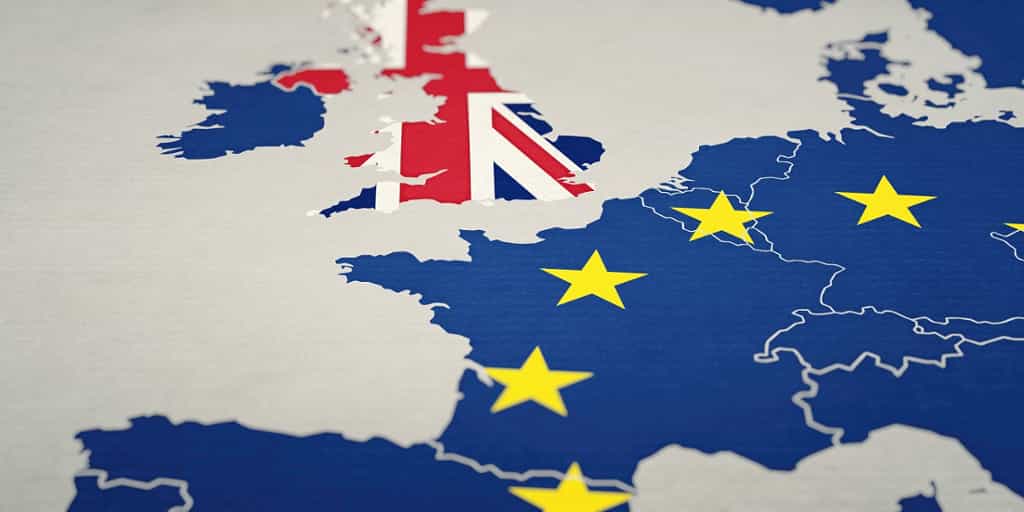
On January 1, 2021, the United Kingdom formally left the European Union’s Single Market and Customs Union — ending nearly five decades of deep economic integration and launching one of the most consequential commercial divorces in modern history. More than five years later, the full weight of that decision continues to reshape trade flows, business models, regulatory architectures, and diplomatic relationships on both sides of the Channel. In 2026, Brexit is no longer a political event being debated — it is a structural economic reality being lived, managed, and in some areas, cautiously revisited. Understanding how Brexit continues to impact EU–UK trade relations is essential intelligence for any business, investor, or policymaker operating in or with the European market.
The Trade Cooperation Agreement: Zero Tariffs, Maximum Friction
The narrative most commonly repeated in political circles — that the UK secured a “zero tariff, zero quota” trade deal with the EU — is technically accurate but profoundly misleading as a description of the actual trading environment. The EU-UK Trade and Cooperation Agreement (TCA), which came into force on January 1, 2021, does eliminate tariffs and quotas on goods traded between the two parties. But tariffs were never the primary trade barrier — non-tariff barriers are, and the TCA created them in abundance.
Unlike trade within the EU Single Market — where goods move frictionlessly across borders without customs declarations, regulatory checks, or rules of origin documentation — trade under the TCA requires businesses to navigate a labyrinth of customs procedures every time a product crosses the UK-EU border. Rules of origin requirements mean that exporters must demonstrate that their products meet specific local content thresholds to qualify for tariff-free treatment — a technically demanding and administratively burdensome requirement that catches many businesses off guard, particularly those with complex international supply chains.
The human cost of this complexity is substantial and well-documented. A landmark British Chambers of Commerce survey of more than 1,100 businesses found that 77% of firms trading with the EU said the TCA was not helping them increase sales or grow their business. More than half reported difficulties adapting to new rules for exporting goods, with similar proportions citing challenges in services trade. For many small and medium-sized businesses, the fixed costs of customs compliance — documentation, border agents, delayed shipments — have made smaller EU market opportunities simply uneconomic, causing them to withdraw from markets they previously served routinely.
The Quantified Trade Loss
The academic and policy evidence on the scale of Brexit’s trade impact has converged toward a consistent and sobering conclusion: Brexit has substantially and measurably reduced EU-UK trade in both directions relative to what would have occurred absent Brexit.
The most comprehensive hybrid analysis — combining EU data on trade with the rest of the world as a control group with UK bilateral trade data — estimates that UK exports to the EU fell by approximately 16% and EU exports to the UK fell by approximately 24% compared to the no-Brexit counterfactual. These are not short-term adjustment effects — they reflect the structural imposition of non-tariff barriers that have permanently altered trade economics for thousands of businesses on both sides.
The UK’s own independent fiscal watchdog, the Office for Budget Responsibility (OBR), has maintained consistently since 2016 that Brexit will ultimately reduce UK imports and exports of goods and services by 15% in the long run, shrinking the UK economy by approximately 4% relative to the no-Brexit trajectory — equivalent to roughly £100 billion in current value. This projection has survived multiple government changes and continues to inform UK fiscal planning, representing one of the most significant self-inflicted economic headwinds any major developed economy has voluntarily accepted in the modern era.
At the product level, the damage has been particularly acute for low-value, high-frequency trade flows — the small shipments that were previously cost-effective to send across the Channel but are no longer viable when customs compliance costs are factored in. EU data shows a substantial reduction in the number of distinct products exported from the UK to the EU — a “extensive margin” contraction that represents permanent market exit rather than temporary volume reduction.
Services: The Largely Unresolved Dimension
If the goods trade impact of Brexit is large, the services trade impact may ultimately prove even more structurally significant — and it remains far less resolved. The TCA’s provisions on services were, by the standards of modern trade agreements, remarkably thin. Unlike goods, services received no comprehensive framework for mutual market access, leaving UK services exporters dependent on a patchwork of national-level permissions rather than the seamless EU-wide access they previously enjoyed.
Financial services suffered the most immediate and visible disruption. Before Brexit, the UK’s financial services sector — centered in the City of London — operated under EU “passporting” rights that allowed firms to sell services across all 27 member states from a single UK base. Those passporting rights ended on January 1, 2021, forcing hundreds of financial institutions to establish EU subsidiaries, relocate staff, and transfer assets to continental European hubs. Dublin, Amsterdam, Paris, Frankfurt, and Luxembourg all captured significant portions of the financial services activity that relocated from London.
The EU’s share of total UK financial services exports declined to 29% — a striking fall from pre-Brexit levels that reflects both the structural impediments created by the loss of passporting and the deliberate efforts by EU financial hubs to attract relocating business. A Memorandum of Understanding on regulatory cooperation between the UK and EU financial regulators — agreed in principle alongside the TCA — had still not been signed years after the TCA’s implementation, leaving a critical gap in the bilateral financial services framework that both sides have periodically acknowledged but failed to resolve.
The British Chambers of Commerce, in its most recent assessment, confirmed that nearly half of businesses exporting services cite red tape and market access issues as key barriers post-Brexit — underscoring that the services trade challenge is a lived business reality, not merely an academic concern.
The UK’s Declining Trade Openness
One of the most telling macro-level indicators of Brexit’s cumulative trade impact is the UK’s declining trade openness — the combined value of imports and exports as a share of GDP. Since the implementation of the TCA, trade openness has fallen significantly relative to other G7 countries, with the UK largely missing out on the broad-based recovery in global trade volumes that benefited its peers.
This divergence is particularly striking because it occurred against a backdrop of zero tariffs — suggesting unambiguously that non-tariff barriers, not tariff costs, are the primary mechanism of trade suppression. UK goods imports from the EU fell faster than UK goods exports to the EU in the immediate post-Brexit period, partly because the UK-EU border became more restrictive than the EU-UK border during the phased UK implementation of TCA provisions.
The UK manufacturing and agri-food sectors have been disproportionately affected. The food and drink industry, previously integrated into pan-European supply chains for perishable goods, has faced the highest compliance burden relative to shipment value. Multiple UK food exporters — particularly smaller producers of speciality goods, seafood, and fresh produce — reported withdrawing from EU markets entirely rather than absorbing compliance costs that exceeded their product margins.
The Reset Agenda: Progress and Limits
Five years after Brexit, there is growing political momentum on both sides for a pragmatic recalibration of the EU–UK relationship — not a reversal of Brexit, but a deliberate effort to reduce unnecessary friction while preserving the fundamental architecture of the TCA.
The UK-EU “Reset” agenda, pursued actively in 2025 and 2026, has produced progress in several areas. Negotiations toward a Veterinary and Sanitary Agreement (SPS Agreement) — which would align UK and EU food safety standards and eliminate many of the most burdensome agri-food border checks — have advanced significantly, with both sides acknowledging that the current friction serves neither party’s interests. A comprehensive SPS agreement could meaningfully reduce costs for food and drink businesses on both sides of the Channel, reversing some of the most tangible Brexit trade damage.
The two sides have also made progress on youth mobility frameworks, research collaboration through Horizon Europe, and energy market cooperation — areas where the separation costs have been tangible and where mutual benefit from closer cooperation is clear. However, fundamental barriers remain: the UK’s commitment to regulatory autonomy and its refusal to accept ECJ jurisdiction create structural constraints on how far any alignment can go without crossing what the British government defines as red lines on sovereignty.
Sector-by-Sector Impact Assessment
The Brexit trade impact is not uniform across sectors — it has created distinct winners and losers on both sides that inform investment and business strategy in 2026:
Most adversely affected UK sectors:
- Agri-food and fresh produce: Perishability combined with compliance costs has been devastating for small producers
- Financial services: Loss of passporting rights triggered the largest structural relocation of any sector
- Professional services: UK professionals lost automatic recognition of qualifications in EU member states, adding costs and delays for service providers
- Creative industries: Touring musicians, artists, and film crews face significant visa and work permit complexity that imposes real costs
Sectors demonstrating adaptation:
- Pharmaceuticals: UK firms have adapted through dual-market regulatory strategies and EU-based manufacturing subsidiaries
- Luxury goods and premium brands: Premium positioning has preserved EU market share despite higher logistical costs
- Digital and tech: Remote service delivery has partially insulated digital businesses from physical border friction
EU sectors impacted:
- German automotive: UK market access has become more complex and costly, contributing to broader challenges facing German car manufacturers
- European SME exporters: Smaller EU companies serving UK niche markets have disproportionately withdrawn, citing compliance complexity not worth the administrative investment
Investment Implications
For investors, Brexit’s trade legacy creates several durable portfolio considerations:
UK companies with high EU revenue exposure face structurally higher operating costs than equivalent EU-based competitors — a persistent margin headwind that depresses valuations in sectors like food manufacturing, professional services, and financial intermediation. Conversely, EU-based competitors that absorbed UK market share post-Brexit — particularly Dublin and Amsterdam financial centers, Frankfurt’s banking sector, and Continental European food producers — have benefited from structural tailwinds that show no sign of reversing.
The euro-sterling exchange rate remains a critical variable. Sterling’s persistent weakness since the 2016 referendum — reflecting the structural economic headwinds identified by the OBR — affects the relative competitiveness of UK exporters and the purchasing power of UK-based investors holding EU assets. Currency risk management is a non-negotiable component of any cross-channel investment strategy in 2026.
Five Years On: No Return, But Room to Repair
Brexit is irreversible in any politically realistic timeframe — no mainstream UK political party advocates rejoining the EU Single Market or Customs Union, and EU member states have made clear that partial re-entry on favorable terms is not on offer. The structural trade costs are real, measurable, and persistent.
But “irreversible” does not mean “unimprovable.” The pragmatic reset agenda underway in 2026 represents a mature recognition that the original TCA — negotiated under extraordinary time pressure and political tension — left significant mutual value on the table. An SPS agreement, deeper financial regulatory cooperation, improved professional qualifications recognition, and enhanced energy market coordination could collectively recover a meaningful portion of the trade loss without requiring any change to Brexit’s fundamental constitutional settlement.
For businesses, investors, and policymakers on both sides of the Channel, the task is not to relitigate the past but to navigate the present with clear eyes — understanding where the friction is real and where it can be reduced, where the opportunities of separation exist alongside the costs, and how to build commercial relationships resilient enough to thrive regardless of the political weather between Brussels and London.