
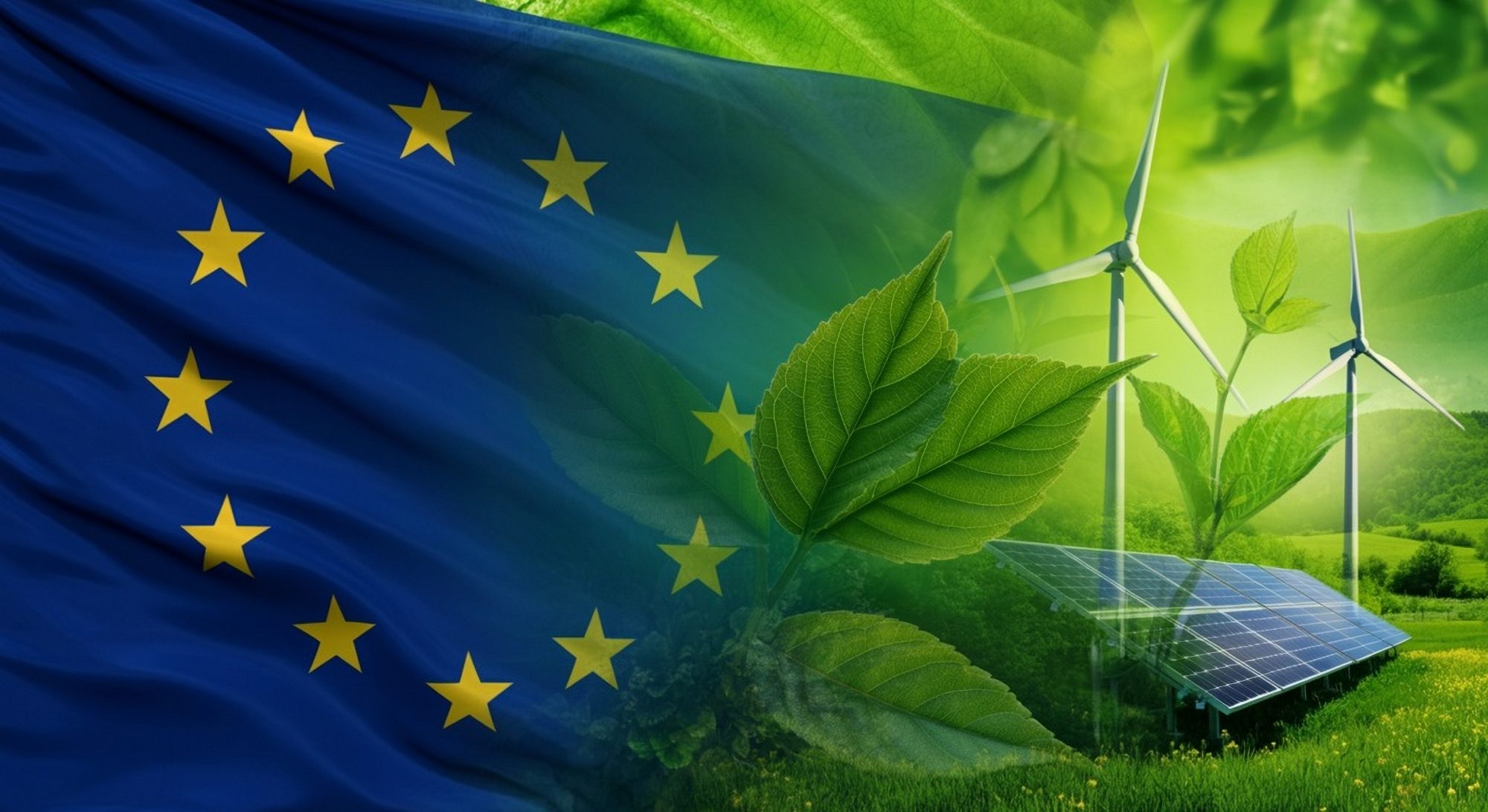
Europe’s green transition—driven by the European Green Deal and its successor strategies—is no longer a political promise; it is a massive, multi‑trillion‑euro industrial and financial program reshaping energy, manufacturing, transport, and finance. By 2026, the EU expects to need €660 billion in clean‑energy and energy‑efficiency investment per year until 2030, with that figure rising to €695 billion annually between 2031 and 2040. This scale of capital demand is creating a wave of new investment opportunities across sectors such as renewable energy, hydrogen, grid modernization, industrial decarbonization, and green‑finance infrastructure.
For investors, the European Green Transition looks less like a “climate side‑bet” and more like a core, long‑term growth engine, driven by regulation, subsidies, and a clear policy‑driven demand curve for clean technologies.
Policy‑Backed Demand at Industrial Scale
At the heart of the opportunity is policy‑driven demand: EU‑level legislation now mandates:
- Deep decarbonization by 2050,
- Massive expansion of renewable generation (wind, solar, and hydro),
- Electrification of transport and heating, and
- Modernization of energy‑distribution and storage infrastructure.
To translate these goals into reality, Brussels has rolled out concrete investment programs:
- Modernisation Fund: Already disbursed €12.65 billion across 39 renewable‑energy projects in 10 Member States, with a record €2.97 billion tranche announced in 2024 to upgrade grids and power systems.
- Clean Energy Investment Strategy: Aims to unlock over €75 billion from the European Investment Bank (EIB) Group by 2028, de‑risking clean‑energy and energy‑efficiency projects for private capital.
- EU Green‑Industrial Deals: Combine Net‑Zero Industry Act, Critical Raw Materials Act, and Green Deal Industrial Plan to subsidize EU‑based manufacturing of batteries, hydrogen systems, and other net‑zero tech, reducing dependence on foreign supply chains.
Because these frameworks are binding and multi‑year, they give investors a predictable pipeline of projects, from offshore wind farms and grid‑upgrade contracts to green‑hydrogen production hubs and battery‑gigafactories.
Renewables and Clean Power Infrastructure
The largest near‑term opportunity lies in renewable energy and grid modernization. The EU wants to move toward an era of “renewable abundance,” with plans to spend around €300 billion on global energy‑transition projects by 2027, including cross‑border interconnectors and “green‑corridor” partnerships (e.g., EU–Namibia for solar and green hydrogen).
Investors can participate via:
- Project finance and infrastructure‑equity vehicles backing offshore and onshore wind, utility‑scale solar, and hybrid storage projects.
- Grid‑modernization and smart‑grid upgrades: Digital‑grid‑management software, flexible‑demand‑response platforms, and EV‑charging‑network operators benefit as Europe rolls out EV‑charging stations every 60 km and accelerates permitting for renewables.
- Regional‑interconnector projects, such as the ELMED link between Italy and Tunisia, which are funded through EU‑grants and public‑private partnerships and offer long‑term regulated‑return profiles for institutional investors.
Recent data show that EU‑level programs have already supported dozens of large‑scale renewable projects with clear, government‑backed revenue models, making them attractive for pension funds, infrastructure‑PE, and green‑bond‑issuers alike.
Hydrogen, Green‑Fuels, and Industrial Decarbonization
Hydrogen and other low‑carbon fuels are emerging as a second major pillar of the green‑transition investment story. The EU has launched a Clean Hydrogen Partnership that is opening €105 million in Horizon Europe‑style grants in 2026 for real‑world hydrogen‑demonstration projects, including Hydrogen Valleys that integrate production, storage, and end‑use at regional scale.
Beyond hydrogen, the Innovation Fund has unlocked €5.2 billion in EU‑ETS‑revenue‑based grants for:
- Net‑zero‑technology projects,
- Green hydrogen production, and
- Industrial‑heat decarbonization (e.g., replacing fossil‑fuel boilers in steel, chemicals, and cement).
For investors, this means:
- Production‑scale green‑hydrogen plants and electrolyzer‑equipment makers represent capital‑intensive but policy‑backed assets with strong downside‑protection from contracts and subsidies.
- Midstream infrastructure such as hydrogen‑storage tanks, pipelines, and refueling hubs can offer utility‑style cash flows if embedded in regional “Hydrogen Valleys.”
- Industrial‑processing and materials‑tech firms that help hard‑to‑abate sectors (steel, cement, aviation, shipping) decarbonize are increasingly attractive to venture and late‑stage PE as they plug into these EU‑funded programs.
Because many of these projects are too risky or capital‑intensive for private capital alone, public‑sector grants, loan guarantees, and blended‑finance structures effectively reduce the cost of capital and invite private investors to participate later in the risk curve.
Circular Economy, Waste‑to‑Value, and Resource Efficiency
The green transition is not just about energy; it also includes circular‑economy and resource‑efficiency initiatives. The EU’s push for strategic autonomy in critical raw materials (via the Critical Raw Materials Act) and the broader focus on circularity is creating new markets for:
- Advanced recycling and material‑recovery technologies,
- Industrial‑waste‑to‑energy and waste‑to‑chemicals platforms, and
- Product‑as‑a‑service and remanufacturing business models in sectors such as electronics, textiles, and automotive.
In 2026, private‑equity and growth‑equity funds are increasingly backing circular‑tech platforms that:
- Sort and process difficult‑to‑recycle materials at scale,
- Use AI and robotics for high‑precision separation, and
- Offer “closed‑loop” material contracts to manufacturers needing certified‑low‑carbon inputs.
The EU’s ESG‑disclosure and taxonomy‑rules (e.g., Corporate Sustainability Reporting Directive) also push heavy‑industry players to invest in circular‑supply‑chain solutions, creating a steady, policy‑driven revenue base for circular‑tech providers.
Green Finance, ESG Infrastructure, and Transition Finance
On the financial side, the green transition is reshaping capital markets themselves. Green bonds, sustainability‑linked loans, and transition‑finance instruments are becoming core tools for companies that must decarbonize but are not yet “clean.”
Key trends include:
- Transition finance: Loans and bonds tied to specific decarbonization milestones for high‑emitting sectors (e.g., utilities, refineries, steel) are growing rapidly as EU regulations tighten. This creates demand for monitoring and verification platforms that track emissions, certificates, and environmental‑impact metrics.
- Green‑finance infrastructure:
- Real‑time ESG‑data platforms,
- AI‑driven green‑bond‑verification tools, and
- Automated impact‑reporting systems
are becoming commodities for asset managers and banks, spurring a wave of fintech‑style M&A and venture investment.
- EU‑wide green‑bond initiatives: Public‑sector‑backed or supervised programs, such as those under the EIB and national development banks, are standardizing green‑bond criteria and improving secondary‑market liquidity.
For investors, this means two layers of opportunity:
- Direct exposure to renewable and low‑carbon projects via green‑debt and project‑equity vehicles.
- Indirect exposure via fintech and infrastructure‑providers that power the green‑finance machinery (data, analytics, compliance, and issuance platforms).
Regional and Emerging‑Market Spillovers
Europe’s green‑transition programs are also spilling beyond EU borders, creating cross‑border investment themes. For example:
- The EU’s “green‑corridor” concept with countries like Namibia is designed to import solar‑generated electricity and green hydrogen into Europe, stimulating investment in remote‑renewable‑power plants and port‑linked hydrogen‑export hubs.
- European financial institutions and development banks are increasing support for emerging‑market energy‑transition projects, which currently receive less than 10% of global green‑transition capital, opening arbitrage opportunities for early‑movers.
These cross‑border flows are attracting institutional capital that wants long‑duration, regulated‑or‑contract‑backed cash flows but is willing to accept some geopolitical or execution‑risk premiums in exchange for exposure to under‑financed but policy‑supportive markets.
How Investors Can Position for the Green Transition
In 2026, positioning for the European Green Transition does not require a single “green‑only” bet; it can be done along multiple dimensions:
- Core infrastructure: Invest in renewable power producers, grid‑modernization platforms, EV‑charging networks, and hydrogen‑infrastructure funds that benefit from EU‑level subsidies and permitting support.
- Industrial‑decarbonization and circular‑tech: Target companies and technologies that decarbonize heavy industry, recycle critical materials, or provide “green‑input” services to EU manufacturers.
- Green‑finance and data infrastructure: Back ESG‑data platforms, AI‑driven verification tools, and green‑bond‑services providers that underpin Europe’s expanding sustainable‑finance ecosystem.
- Geographic‑arbitrage plays: Explore EU‑plus‑emerging‑market green‑corridor projects (e.g., North‑Africa‑to‑Europe renewables and hydrogen) that combine EU‑policy support with lower‑cost, untapped‑resource bases.
Because the EU is now systematically redirecting trillions of euros toward decarbonization and industrial resilience, the green transition is no longer a niche “impact” theme—it is a structural investment megatrend. For investors who can match EU‑level risk‑profiles with realistic expectations on returns, Europe’s green transition offers one of the most durable, policy‑anchored opportunity sets in the global economy.