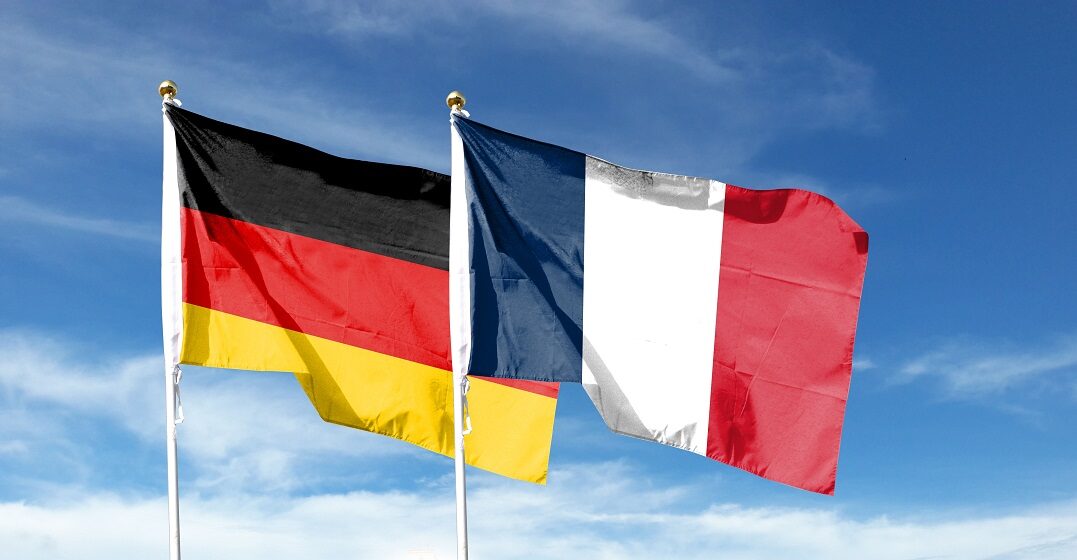
Europe does not speak with one voice — but when Germany and France speak together, the continent listens. The Franco-German partnership has been the defining axis of European integration since the Treaty of Rome in 1957, and in 2026, as the EU confronts an unprecedented convergence of geopolitical, economic, and technological challenges, the role of these two economies as co-pilots of the European project has never been more consequential — or more contested. Understanding the interplay between Berlin and Paris, their areas of alignment and friction, and their combined influence on EU policy is essential for any investor, entrepreneur, or policymaker seeking to navigate the European landscape.
The Economic Weight of the Two Giants
The numbers alone tell a powerful story. Germany enters 2026 as Europe’s largest economy, with a nominal GDP of approximately $5.3 trillion — more than the combined output of the 20 smallest EU member states. France, the second-largest, contributes a GDP of roughly $3.1 trillion, making the two countries together responsible for approximately 40% of the EU’s total economic output. Western Europe as a whole is projected to generate around $31 trillion in 2026, with Germany and France firmly anchoring that performance.
Beyond raw size, both nations carry structural weight across the EU’s key decision-making institutions. Germany and France each have significant representation in the European Parliament, the European Council, and in the leadership of the European Commission, the European Central Bank, and multilateral institutions like the G7 and IMF. When German and French finance ministers met in Berlin in January 2026, their joint statement — committing to strengthen macroeconomic stability, confront US tariff threats with coordinated EU instruments, and advance the euro’s role in global economic resilience — immediately became the reference position for EU-wide policy discussions.
Germany: The Industrial Engine Under Structural Strain
Germany’s economic model has long been built on a foundation of export-oriented industrial manufacturing, world-class engineering, and Mittelstand — the deep ecosystem of small and medium-sized family-owned businesses that form the backbone of German industrial output. For decades, this model delivered consistent growth, full employment, and the fiscal surpluses that made Germany the EU’s de facto paymaster.
In 2026, that model is under significant structural pressure. Germany’s economy grew by just 0.1% in 2025 — its second consecutive year of contraction or near-stagnation — before recovering to an anticipated 0.8–1.1% growth in 2026, according to projections from the ifo Institute, Goldman Sachs, and DIHK. The sources of weakness are multifaceted and structural, not merely cyclical:
- Energy cost shock: Germany’s transition away from Russian natural gas and nuclear power has left it with significantly higher industrial energy costs than global competitors, eroding competitiveness in energy-intensive sectors like chemicals, steel, and automotive manufacturing
- Automotive sector disruption: The global shift to electric vehicles is disproportionately hitting Germany’s automotive supply chain, which employs millions and represents a core pillar of export earnings. German automakers are losing ground to Chinese EV manufacturers in both domestic and third-country markets
- Bureaucratic overload: Germany’s regulatory and administrative complexity is consistently cited by businesses as the single largest structural impediment to investment and growth. The ifo Institute notes that companies and startups are “hindered by bureaucratic hurdles and an outdated infrastructure”
- Demographic decline: Germany’s workforce potential is shrinking as its population ages, reducing the labor supply that has historically sustained industrial output
- US tariff exposure: Exports to the US account for 3.8% of Germany’s GDP — the highest of any major EU economy — making it disproportionately exposed to US reciprocal tariff policies
Germany’s strategic response has been bold. Following last year’s landmark amendment to the constitutional debt brake, Germany’s government is now authorized to dramatically expand defense spending and infrastructure investment. Goldman Sachs projects Germany’s fiscal deficit will widen to 3.7% of GDP in 2026 and 3.9% in 2027 — the highest outside of recessionary periods in decades. This fiscal expansion, if effectively deployed into infrastructure modernization, digital transformation, and energy transition investment, represents the most significant economic policy shift Germany has undertaken in a generation.
France: Strategic Vision and Geopolitical Ambition
While Germany’s identity is rooted in industrial manufacturing, France’s economic leadership model is defined by strategic industrial policy, state-directed investment, and geopolitical assertiveness. President Emmanuel Macron has been the EU’s most vocal advocate for European sovereignty — the idea that the EU must develop autonomous capacity in defense, technology, and critical industrial sectors rather than remaining dependent on the United States or China.
At the EU Leaders’ Summit in Antwerp in February 2026, Macron delivered a landmark speech calling for common EU debt issuance — so-called eurobonds — to finance the €750–800 billion annual investment that the 2024 Draghi Competitiveness Report identified as necessary to close Europe’s innovation and industrial gap with the US and China. His framing was urgent: “If the EU does nothing in the next three to five years, it will be swept out of these sectors”. The three strategic battles Macron identified — defense and security, green transition technologies, and artificial intelligence and quantum computing — have since become the organizing framework for EU competitiveness policy discussions.
France’s economic position in 2026 is more resilient than Germany’s, partly by structural design. French exports to the US represent just 1.8% of GDP, compared to Germany’s 3.8%, significantly reducing France’s tariff exposure. More than half of French exports are destined for other Eurozone countries, providing a stable intra-EU demand buffer that insulates France from external trade shocks. Natixis analysts describe France as “uniquely positioned to benefit from the EU’s ambition to expand defence capacity and lower reliance on US imports” — a direct consequence of France’s world-class defense industry, including MBDA, Airbus Defence, and Dassault Aviation.
France’s GDP growth trajectory for 2026 is modest but stable, supported by resilient domestic consumption, continued AI infrastructure investment (with major foreign AI data center projects recently announced), and expanding defense procurement that benefits French industrial champions.
The Franco-German Partnership: Unity, Friction, and Forward Motion
The relationship between Paris and Berlin has rarely been a frictionless partnership — and 2026 is no exception. The two countries approach Europe’s economic challenges from fundamentally different philosophical starting points.
France instinctively favors interventionist industrial policy, collective EU debt instruments, European preference in public procurement, and a proactive state role in steering strategic sectors. Germany has traditionally championed fiscal discipline, free market principles, limited state aid, and single market openness — positions rooted in the post-war ordoliberal economic tradition.
In February 2026, this tension burst into open view when Germany and Italy jointly circulated a document to EU capitals prioritizing foreign direct investment attraction and market openness, directly clashing with France’s preferred “Made in Europe” procurement policy. The disagreement reflects genuine philosophical divergence on whether Europe’s competitive renewal should be driven primarily by market liberalization or by strategic industrial intervention.
Yet despite these tensions, the Franco-German partnership remains the EU’s most essential political mechanism — and both sides know it. The joint ministerial meeting in Berlin in January 2026 produced a coordinated stance on US tariffs, G7 coordination under France’s 2026 presidency, and shared commitments to the Savings and Investment Union that will channel European capital toward strategic priorities. This capacity to ultimately align on European-level responses — even after visible public disagreements — is what makes the Franco-German axis irreplaceable.
The Institut français des relations internationales (IFRI) characterized 2026 as a year of “Franco-German reset” — with a new German government under Friedrich Merz and the French presidency of the G7 creating fresh diplomatic momentum for joint leadership after years of policy divergence. The Franco-German Council of Ministers convened in early 2026 with an ambitious agenda covering defense integration, common industrial policy, energy transition financing, and European monetary architecture.
Influence on the Rest of Europe
Germany and France do not merely manage their own economies — they actively shape the economic trajectory of the entire continent. Their bilateral consensus, or lack thereof, determines whether major EU initiatives advance or stall.
The “Six Nations” group that emerged in January 2026 — with Germany and France joined by Italy, Spain, Poland, and the Netherlands — represents an inner circle of EU economies committed to accelerating progress on the Capital Markets Union, euro-area governance, and defense investment coordination. This informal coalition mirrors the EU’s real decision-making anatomy: large member states coalescing around shared interests, with Franco-German agreement as the essential precondition for any collective action.
Germany’s fiscal expansion in 2026 is already having continent-wide effects. German infrastructure investment stimulates demand for Eastern European suppliers, construction materials, and engineering services. German defense spending increases, mandated by NATO commitments, are creating supply chain opportunities across the entire EU defense industrial base. When Germany invests, Europe grows.
France’s strategic agenda is equally formative. Paris’ advocacy for European AI sovereignty has accelerated EU investment in data centers, supercomputing infrastructure, and AI regulatory frameworks that define the rules of the global digital economy. France’s push for “Made in Europe” policies, if realized, would redirect hundreds of billions in public procurement toward EU-based suppliers — a structural demand stimulus for European industry at every level of the value chain.
The Stakes of Getting Leadership Right
The Draghi report’s sobering conclusion — that Europe requires €750–800 billion annually in additional investment to remain competitive with the US and China — frames the urgency of Franco-German coordination. This is not a number any single member state can mobilize alone. It demands the kind of political architecture that only a functioning Franco-German partnership can construct and legitimize.
The risk of leadership failure is real. Le Monde editorialized in February 2026 that “urgent action is needed to resolve the crisis” between France and Germany, warning that chronic strategic misalignment between the two pillars risks leaving the EU without the political agency to respond to the accelerating economic competition from Washington and Beijing. If Paris and Berlin cannot agree on whether Europe needs more integration or more market freedom, the EU’s response to its competitive challenges will remain fragmented and underpowered.
A Partnership Europe Cannot Afford to Lose
Germany and France are not merely Europe’s two largest economies — they are the institutional memory, political legitimacy, and financial capacity upon which the European project rests. Their disagreements are productive tensions within a shared commitment to European integration. Their alignments, when achieved, mobilize the entire continent.
In 2026, both countries are navigating profound structural transitions — Germany reinventing its industrial model, France projecting geopolitical ambition on a continent increasingly left to define its own destiny. The quality of their partnership, and the speed at which they can translate strategic alignment into concrete EU policy, will determine whether Europe consolidates its position as a global economic power or gradually cedes ground to rivals that have no such coordination challenges.
For investors, entrepreneurs, and policymakers worldwide, watching the Franco-German axis in 2026 is not optional background reading — it is essential intelligence about the direction of the world’s largest single market.